
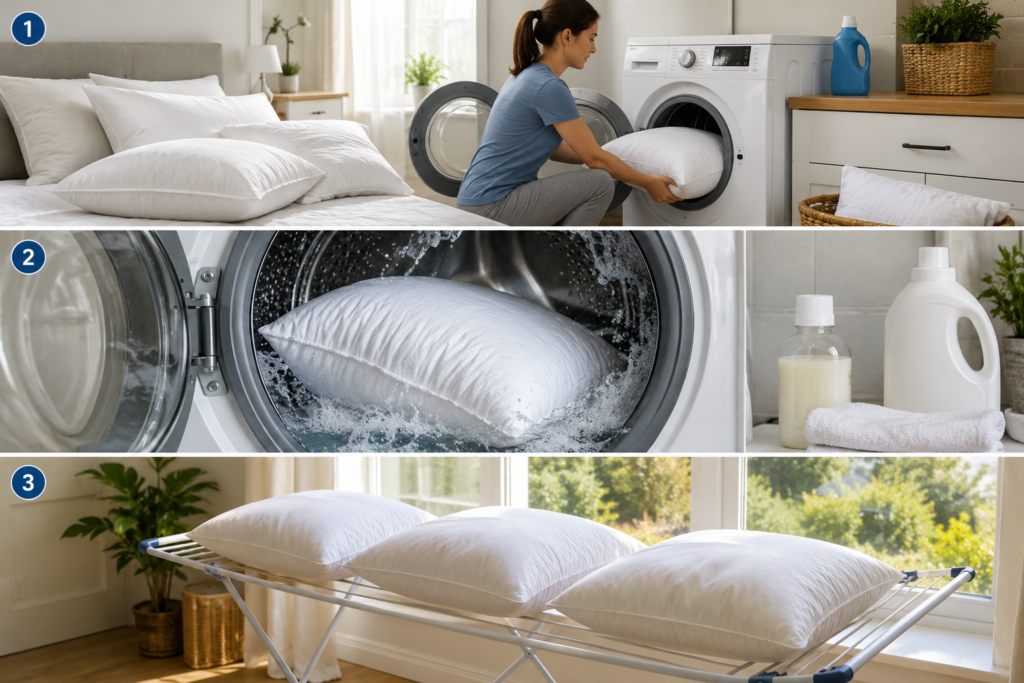
Pillows collect sweat, body oils, dust, and dead skin over time. Even when a pillow looks clean, it can still need a proper wash. Regular cleaning can help keep your bedding fresh and comfortable.
However, you cannot wash every pillow in the same way. The right method depends on the pillow material and the instructions on its care label.
This guide explains how to wash pillows safely and easily at home.
Can You Wash All Pillows?
No. Some pillows can go into a washing machine, while others need more careful cleaning.
Common pillow types include:
- Polyester or synthetic pillows
- Down and feather pillows
- Memory foam pillows
- Latex pillows
Before washing any pillow, check the care label. It should tell you whether the pillow can be machine washed, hand washed, or only spot cleaned.
If the label says not to wash the pillow, follow those instructions.
How to Wash Pillows in a Washing Machine
Many synthetic and some down or feather pillows can be machine washed if the care label allows it.
Follow these steps.
1. Remove the Pillowcase
Take off the pillowcase and any protective cover. Wash these separately according to their care instructions.
2. Check the Pillow
Look for small tears, loose seams, or damaged areas. A damaged pillow may become worse during washing.
Repair small tears before putting the pillow in the machine.
3. Treat Visible Stains
If the pillow has stains, gently treat them before washing.
You can use a small amount of suitable liquid laundry detergent on the stained area. Avoid using too much detergent because excess soap can be difficult to rinse out.
4. Wash Two Pillows Together
If possible, wash two pillows at the same time. This can help keep the washing machine balanced during the cycle.
If you only have one pillow to wash, check your washing machine instructions before adding other items.
5. Choose a Gentle Cycle
Use a gentle or delicate cycle when the care label permits machine washing.
A reference test found that a warm-water delicate cycle produced the best cleaning result among the three methods tested. However, this was a specific comparison, not a rule for every pillow.
6. Use a Small Amount of Detergent
Use a mild liquid laundry detergent and avoid adding more than necessary.
Too much detergent can leave soap inside the pillow.
7. Use an Extra Rinse
An extra rinse can help remove remaining detergent from the pillow.
This can be especially useful because pillows can hold water and soap inside their filling.
8. Remove the Pillow Promptly
Take the pillow out of the washer when the cycle finishes.
Do not leave a wet pillow sitting inside the machine for a long time.
Warm Water or Cold Water?
The correct water temperature depends on the pillow’s care instructions.
If the label allows warm water, it may be an option for machine-washable pillows. In the reference comparison, the warm-water method produced a better cleaning result than the cold-water method.
However, you should not use hot water unless the manufacturer says it is safe.
Always follow the care label instead of choosing a temperature based only on general advice.
How to Hand-Wash a Pillow
Some pillows may need to be washed by hand.
Start by filling a clean basin or tub with warm water if the care instructions allow it. Add a small amount of suitable liquid soap or detergent.
Place the pillow in the water and gently work the water through the filling.
Avoid aggressive twisting or squeezing because this can damage the pillow.
After washing, rinse the pillow several times until the water runs clear and no soap remains.
Hand washing can be more difficult because a wet pillow becomes heavy. It can also take more effort to rinse the filling properly. In the reference test, hand washing produced a weaker cleaning result than the two machine-washing methods.
How to Clean Memory Foam Pillows
Memory foam pillows usually need different care from washable synthetic pillows.
Do not put a memory foam pillow into a washing machine unless the manufacturer specifically says that it is machine washable.
Instead, remove the pillow cover and wash it separately.
For small stains, gently spot clean the affected area with a suitable cleaning solution. Avoid soaking the foam.
After cleaning, allow the pillow to dry completely in a well-ventilated area.
Do not put memory foam in a dryer unless the care instructions specifically allow it.
How to Wash Down and Feather Pillows
Down and feather pillows can sometimes be machine washed, but you should always check the care label first.
If machine washing is allowed:
- Use a gentle cycle.
- Use a small amount of mild detergent.
- Run an extra rinse if appropriate.
- Remove the pillow promptly after washing.
- Make sure it dries completely.
The most important part is drying. Moisture trapped inside the filling can cause unpleasant odors and other problems.
How to Dry Pillows Properly
Drying is just as important as washing.
A pillow should be completely dry before you put it back on your bed.
For pillows that are dryer-safe, use the lowest suitable heat setting and follow the care label.
For air drying, place the pillow somewhere clean with good airflow. Turn or reposition it regularly so different areas can dry.
Do not store or use a pillow while it is still damp.
How Often Should You Wash Pillows?
There is no single washing schedule that works for every pillow.
How often you clean a pillow depends on its material, use, cover, and care instructions.
Pillowcases and protective covers usually need more frequent washing because they are in direct contact with your skin.
The pillow itself can be cleaned when needed and according to the manufacturer’s instructions.
Common Mistakes to Avoid
When learning how to wash pillows, avoid these common mistakes:
Using Too Much Detergent
More detergent does not always mean a cleaner pillow. Excess soap can remain inside the filling.
Ignoring the Care Label
A washing method that works for one pillow can damage another.
Always check the manufacturer’s instructions first.
Using Too Much Heat
High heat can damage some pillow materials.
Use the temperature recommended on the care label.
Not Drying the Pillow Completely
A damp pillow should not be put back on the bed.
Make sure the inside is completely dry before using it again.
Washing Memory Foam Like a Regular Pillow
Memory foam needs special care. Machine washing or soaking it can damage the foam.
When Should You Replace a Pillow?
Washing can refresh a pillow, but it cannot restore every old pillow.
Consider replacing a pillow if it has lost its shape, stays uncomfortable, has permanent damage, or no longer provides proper support.
The right replacement time depends on the pillow material and its condition.
Frequently Asked Questions
Can you wash pillows in a washing machine?
Some pillows can be machine washed, but not all. Check the care label before washing.
What is the best water temperature for washing pillows?
Use the temperature recommended by the manufacturer. For machine-washable pillows, a reference test found warm water on a delicate cycle more effective than cold water in that comparison.
Can you wash memory foam pillows?
Most memory foam pillows should not be machine washed or soaked. Follow the manufacturer’s cleaning instructions.
How do you dry a pillow after washing?
Use a dryer only if the care label allows it. Otherwise, air-dry the pillow in a clean area with good airflow and make sure it is completely dry before use.
Can you hand-wash pillows?
Some pillows can be hand washed. Use the care instructions, wash gently, rinse thoroughly, and dry completely.
Final Thoughts
Knowing how to wash pillows starts with checking the care label. Different materials need different cleaning methods.
For pillows that are approved for machine washing, a gentle cycle with the correct water temperature and a small amount of detergent can be an effective option. A reference comparison found warm-water machine washing performed best among the tested methods, but the result should not replace the manufacturer’s instructions.
The most important steps are simple: use the correct washing method, avoid excess detergent, rinse well, and make sure the pillow dries completely.