Finding safe physical activities for a child with motor impairments is a common challenge for caregivers, but structured, tailored solutions exist. Adaptive fitness safely builds strength and coordination through modified environments and targeted exercises when traditional play is not accessible. When researching Adaptive Fitness: Safe Ways to Encourage Movement in Children with Motor Delays, parents discover how to transform challenging physical tasks into safe, achievable steps.
Watching a child struggle on a standard playground is frustrating and isolating for both the parent and the child. These challenges are highly common, as approximately 1 in 6 children in the U.S. have a developmental disability. Standard toys and playground equipment assume a baseline of physical mobility that children with delays often do not possess.
Adaptive fitness changes this dynamic entirely. Instead of forcing a child to adapt to an environment that does not support them, caregivers modify the environment to support the child. This approach removes the risk of physical injury and emotional burnout.
What Are the Common Causes of Severe Motor Delays?
Severe motor delays frequently stem from neurological trauma or birth injuries like cerebral palsy. Identifying these medical origins is vital, as it empowers parents to uncover preventable errors and access legal avenues to fund comprehensive lifelong therapies and specialized adaptive equipment.
Conditions that cause severe motor delays typically affect the brain’s ability to communicate with the muscles. An inability to crawl, grasp objects, or walk independently often traces back to specific events during birth. Hypoxic-ischemic encephalopathy (HIE), a type of brain damage caused by oxygen deprivation, and cerebral palsy are two of the most frequent underlying causes of these physical limitations.
Understanding the exact medical origin of a child’s delay does more than provide medical clarity. It offers a path forward for advocacy and long-term care planning. When these impairments stem from preventable medical errors during delivery, parents have the right to seek accountability and financial support.
Diagnostic advocacy allows families to explore options like hiring a medical malpractice lawyer in Pennsylvania to pursue legal remedies. Securing this financial recovery ensures that parents can fully fund specialized adaptive therapies, private physical rehabilitation programs, and the expensive assistive devices their child will need as they grow.
What Is Adaptive Fitness, and How Does It Help Children?
Adaptive fitness is a tailored approach to physical activity designed for individuals with specific physical impairments. It focuses on safe, individualized movements that eliminate the barriers of traditional play, helping children build muscle strength and coordination steadily without experiencing physical strain.
Traditional play often requires a child to manage their body weight against gravity, balance on uneven surfaces, and process rapid sensory information all at once. For a child with motor delays, this causes muscle fatigue and deep frustration. Adaptive fitness strips away these overwhelming demands. It breaks movement down into small, supported actions that focus on specific muscle groups in a secure environment.
Structured physical interventions are incredibly important for long-term health. Current research shows that only 33% of all children meet minimum physical activity guidelines. For children with developmental delays, falling behind in physical activity compounds their existing challenges. Adaptive fitness ensures they receive the movement they need to support cardiovascular health, joint flexibility, and muscle tone.
The Psychological Benefits of Adaptive Play
Physical delays often make traditional playgrounds socially and emotionally isolating, but adaptive play restores a vital sense of agency. Modifying daily activities allows children to consistently experience success, removing the anxiety of failure and dramatically improving their overall emotional well-being.
When children constantly encounter physical barriers, they often withdraw from play entirely. Adaptive activities change their mindset by showing them what their bodies can achieve. A study of children with physical impairments showed that adaptive play significantly increases positive affective expression, imagination, and a sense of environmental control in children with cerebral palsy.
Focusing on what a child can do, rather than what they cannot do, boosts their confidence. When a child feels secure and capable, they engage more willingly in movement. This willingness is the foundation of successful physical development.
4 Safe Ways to Encourage Gross and Fine Motor Development at Home
Creating a supportive, safe environment at home allows parents to foster both gross and fine motor skills through simple, daily interactions. Modifying routines and utilizing targeted play removes physical barriers, giving children consistent opportunities to build strength without overwhelming them.
Way 1: Engage in Seated Core-Strengthening Games
Seated core-strengthening games safely build trunk stability and balance in children who struggle to stand independently. Using supportive seating, therapy balls, or firm pillows allows your child to practice shifting their weight and balancing their core with minimal risk of falling.
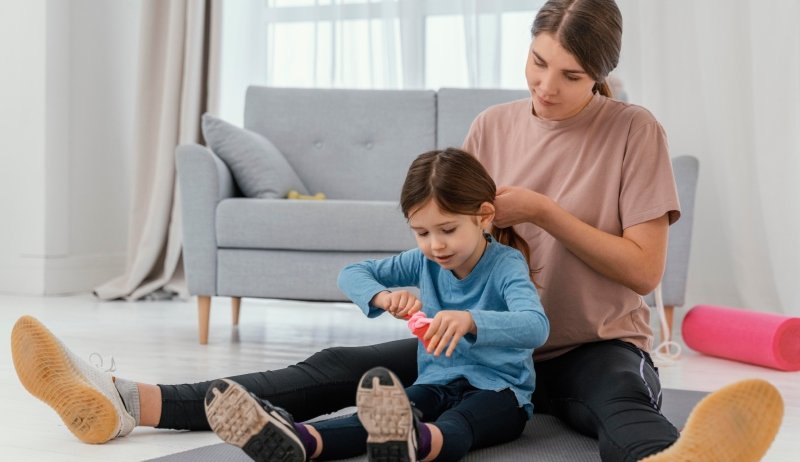
A strong core is the foundation for almost all other gross and fine motor skills. To practice this safely, sit behind your child on a soft mat and use a therapy ball or a specialized supportive seat. Have them reach for toys placed slightly outside their immediate grasp. This encourages them to lean and engage their abdominal muscles to stay upright.
Safety protocols are highly necessary during these exercises. Always provide constant spotting by keeping your hands near the child’s hips or ribs. Avoid overexertion by keeping sessions short and positive. If the child shows signs of fatigue, stop the activity immediately to prevent muscle strain.
Way 2: Use Water Play for Low-Impact Resistance
Water buoyancy naturally supports weak limbs and provides gentle resistance, making aquatic play highly effective for children with severe motor limitations. Splashing or reaching for toys in a shallow pool or bathtub builds muscle strength without the heavy strain of gravity.
Moving on land requires significant effort for a child with low muscle tone or high spasticity. Water play reduces gravity’s resistance, allowing the child to move their arms and legs much more freely. This makes the movement less frustrating and highly rewarding for the child.
During bath time or in a specialized shallow pool, encourage your child to kick their legs or push floating toys under the water. The water acts as a natural cushion and a safe source of resistance. Always keep a secure hold on the child and never leave them unattended near water.
Way 3: Practice Midline Crossing with Sensory Toys
Reaching across the body, known as midline crossing, builds vital neural pathways connecting the brain’s hemispheres. Using engaging, high-contrast, or tactile sensory toys encourages your child to reach and grasp, developing fine motor skills and hand-eye coordination safely and simultaneously.
The ability to cross the body’s midline is necessary for everyday tasks like putting on shoes, writing, or eating. To practice this, position your child in a supportive seat and hold an interesting toy on their left side. Encourage them to reach for it using their right hand, and then repeat the process on the opposite side.
Use contrasting textures, vibrating objects, or light-up household items to capture the child’s attention. Keep the room quiet and distraction-free so the child focuses entirely on the motor task. This targeted practice safely builds the coordination necessary for more complex physical movements.
Way 4: Modify Everyday Household Routines
Daily occupations naturally enhance a child’s motor skills when you transform basic tasks into low-pressure practice. Integrating reaching, grasping, and stretching into dressing, eating, or floor time provides continuous physical therapy without making the child feel like they are working.
Instead of setting aside dedicated “exercise time,” look for ways to incorporate movement into what you already do. When dressing your child, guide their hand to pull their sock up rather than doing it entirely for them. During mealtimes, use adapted utensils with thick grips to help them practice self-feeding.
These small, consistent repetitions build muscle memory and independence. Incorporating movement into daily life reduces the pressure on both the caregiver and the child. If your child struggles with these at-home modifications, document their challenges to share with your pediatrician.
What Types of Adaptive Equipment Facilitate Movement?
Adaptive equipment includes household modifications and assistive devices that make daily movement accessible and safe for your child. Tools like supportive standers, adaptive swings, and modified tricycles provide the physical support needed to practice gross motor skills independently and securely.
Children with severe motor delays often lack the balance to use standard toys. A supportive stander holds a child securely in an upright position, allowing them to bear weight on their legs and improve bone density. Adaptive swings with full-body harnesses offer vital sensory input and vestibular stimulation without the risk of falling. Modified tricycles with trunk supports and foot straps enable children to pedal and build leg strength.
Specialized pediatric equipment is highly expensive, and families often struggle to afford the necessary devices out of pocket. However, financial resources secured through the legal avenues mentioned earlier can fully cover these lifelong necessities. Pursuing accountability for a birth injury ensures your child never has to go without the equipment they need to move safely.
When Should You Transition to Professional Pediatric Therapy?
Transitioning to professional pediatric therapy is necessary when a child misses clear milestones, shows extreme muscle stiffness, or regresses in skills. Distinguishing between innocuous developmental delays and those needing formal early intervention ensures your child receives targeted, clinical physical support.
While at-home adaptive fitness is a great daily tool, it does not replace the need for clinical expertise. Physical therapists (PT) and occupational therapists (OT) possess the specific training required to assess muscle tone, joint alignment, and neurological responses. You should seek professional help if your child feels exceptionally floppy, exhibits rigid muscle spasms, or loses a physical skill they previously mastered.
Advocate for comprehensive medical evaluations with your pediatrician as early as possible. Securing the right professional therapy team provides your family with a customized treatment plan. These professionals will also guide you on exactly which adaptive exercises are safest to continue practicing at home.
Conclusion
Adaptive fitness is a vital, safe way to encourage physical development and emotional well-being in children with motor delays. Modifying daily play at home, utilizing specialized adaptive equipment, and understanding the medical root causes of these delays all work together to support a child’s growth. Finding the right balance of support removes the barriers of traditional play, allowing your child to build strength and confidence securely. Speak with a medical professional to build a safe fitness routine, and consult a legal expert if you suspect your child’s motor delays require long-term financial recovery.