There’s a certain magic to an older home. Timber floors that creak in familiar spots, ceilings that reach higher than they need to, cornices with the kind of detail nobody puts in anymore. All that character comes with a few less charming habits, though. Rooms that never quite warm up. Power bills you’d rather not open. And a wall between you and the street that seems to let every footpath conversation right on through.
The good news? You don’t have to tear the whole thing apart to sort it out. A few smart upgrades can make an older home warmer and quieter, and you’ll notice it in every season. Here are three worth putting your money toward!
1. Seal Air Leaks and Improve Insulation
Start by figuring out where the heat is escaping. Older properties usually have gaps around windows, doors, attics, and basements. Cold air slips in, warm air drifts out, and none of it seems like much on its own. Over a full winter, though, all those small leaks add up and quietly force your heating to work overtime.
The fixes cost less than you’d think:
- Caulk around window frames to seal the visible gaps
- Adhesive-backed weatherstripping along the edges of doors
- Foam sealant for the trickier, harder-to-reach spots
These jobs take little effort and pay off quickly. And if hunting down hidden leaks isn’t your idea of a weekend, a professional draft assessment will find the ones you’d otherwise miss.
Insulation handles the other half of the job. A lot of older homes were built before anyone worried about standards, so their attics and wall cavities may have next to nothing inside them. Insulation batts or blown-in insulation help the house hold its warmth in winter and stay cooler through summer. Seal and insulate at the same time, and you’ll likely see smaller bills and fewer drafts by the first cold snap.
2. Upgrade Windows and Doors
In most old homes, windows and doors are where the defenses fall apart. Single-pane glass does almost nothing to keep the outside temperature out, and gaps around door frames wave in cold air and street noise together.
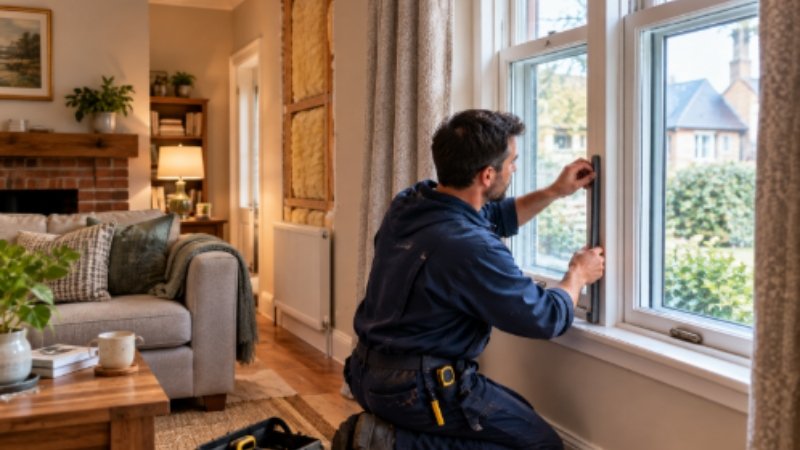
Trading single panes for energy-efficient double or triple-pane windows tackles both at once. When it comes to the frames, uPVC window frames are a favourite for good reason. They insulate well and skip the ongoing upkeep timber demands, which you’ll appreciate if you’ve ever spent an afternoon repainting one.
Give your doors the same attention. Heavy-duty weatherstripping around the frame closes off the little gaps drafts love. Got an exterior door that takes a battering from the weather? A storm door adds another insulating layer and cuts your heat loss when the cold sets in.
You end up with two wins here: steadier temperatures indoors and a real reduction in noise. That second one counts for a lot if you’re anywhere near a busy road.
3. Add Soundproofing Materials
Sometimes you seal every gap, swap out the glass, and the place is still loud. Thin walls and timber floors are good at passing sound along. That’s where acoustic panels or mass-loaded vinyl inside your wall and ceiling cavities earn their spot, soaking up noise before it drifts room to room or in from outside.
Soft furnishings help too, and they’ll cost you far less:
- Heavy curtains to absorb sound and cut echo
- Thick rugs across bare floors
- Carpet or acoustic underlay for timber or tiled levels
Here’s the quiet bonus. Those same curtains and floor coverings add another layer of insulation, so you get warmth thrown in with the peace.
Making Your Older Home Work Harder for You
Getting an older home warmer and quieter doesn’t mean a full-scale renovation. Sealing leaks, upgrading windows and doors, and adding some soundproofing each do plenty alone, and even more when you combine them.
Begin wherever the discomfort nags at you most. Maybe it’s the drafty living room, maybe the bedroom facing the street that never fully settles. Work outward from there. Small, steady changes can turn an old house into a place that’s as comfortable to live in as it is lovely to look